Sunday, 12 February 2012

How can plants absorb water and minerals from the soil ?


Plants may be best mindless creatures ever created. Discussed now is how plants are able to absorb water and minerals from the soil until it reaches a height of hundreds of meters? Well, it's unbelievable. How not, that would be against gravity. Even with today's most sophisticated technology requires a sophisticated pump to do such a thing.
But, how plants can do?

It is easy for God to do it. But, for us to solve it alone is difficult. Until now, scientists have not been able to ascertain the exact theory on the matter. Scientists are only able to ask some plausible theory about this. One of the most popular theories is that plants utilize water pressure difference inside and outside the cell carrier (xylem). Thus, plants must continuously adjust the pressure in the cells xilemnya. Just so you know, xylem cells are dead cells. Xylem consists of vessel cells and trakeid. Cells were like pores that are connected allowing water to pass through.
c
And how plants utilize the pressure difference?

When the pressure outside the cells, the plants should strive to maintain the pressure in the cell to vaporize not too much, because it can cause the water outside the cells get too much and that will can lead to excess water and rotting vegetation. Then, if the pressure on the outside of the cell is low, the plants have to adjust the pressure in the cell untul lower so that water from the plant is not out of the cell and vice versa, the water from outside the cell to enter the cell. That way, the plants can take as much water.

It Never Was Pyramid History in Indonesia


Acting Director General of History and Antiquities Ministry of Culture and Tourism, I Gde Pitana, said there was never a history of pyramids in Indonesia. This he said, responding to the "discovery" conical stone structures that resemble pyramids in the area of ​​Mount Lalakon, Bandung, and Mount Saduhurip, Garut, West Java.

"In the history of Indonesia has never been and never any history of the pyramids," Gde Pitana in Jakarta, Sunday (10/12/2011).

Besides, according to him, logically, generally human pyramids built for the spiritual benefit of the worship of the gods.

In Indonesia, he said, had too many peaks that most likely people in Indonesia in the ancient times less likely to need to build the pyramids.

"Until now there has not been any archaeological finds that indicate there is a pyramid in Indonesia," he said.

However, it accommodates all forms of information conveyed by various circles of society and follow the truth as soon as possible or else ketidakbenarannya.

He said he himself had been officially commissioned the London Archaeological Center to conduct the testing, research, assessment, and excavation to prove the rock structure is a pyramid or not.

"So it can not be ascertained, the information we received was a conical stone structure up-stairs like a step-pyramid. I can not say it correctly (pyramid) or not," said Gde Pitana.

He added, an archaeologist from the previous ITB have found similar structures were mostly found in the islands, where many mainland emerged as a result of rising sea water.

"The structure of such a lot going on in Indonesia, if so means this is not the result of human culture," he said.

Even so, it would still follow up on reports from the public and prove the truth of theories about the pyramids in Indonesia.

Friday, 10 February 2012

Site Mount Padang Older than the Pyramids of Giza


Ancient catastrophic disaster research team strongly suspect the existence of pyramid building on the site of Mount Padang in Cianjur and Mount Sadahurip in Garut, West Java. Allegations were invited controversy by archaeologists and geologists who had examined the sites of geological and archaeological heritage.
According to one member of the research team Purba catastrophic disaster, Danny Hilman, they drilled up to 20 meters deep in Padang Mountain, not far from the site of megaliths, and found three cavities in the body of the mountain. One of the three room measuring 10 meters x 20 meters. The position of the third storey room.
The results were presented at the Office of the Cabinet Secretariat, on Tuesday (02/07/2012). "So far, archaeologists examined only megalithic site in the upper layer. Not much research into the deeper parts, "says Danny.
According to him, the previous researchers consider the findings in Mount Padang just plain megalithic sites. The results of the drilling team found a layer of building a foundation from 4700 BC. Older than the pyramids of Giza in Egypt 3500 BC old.
Andang Bachtiar, who is also a member of the Research Team for Disaster catastrophic Purba, said drilling discovered a layer of sand. "We are looking for whether it's part coating earthquake-resistant technology," he said.
Not to mention there is a clarification of the existence of the pyramids, the team also suspect there is a pyramid on Mount Sadahurip. The team also observed that the physical form of the two mountains like a pyramid.
The discovery at the site Sadahurip and Padang claimed some of its findings Ancient catastrophic disaster team established the Special Staff of the President of Social Assistance and Natural Disasters, Andi Arief. A team of nine people from different disciplines, such as geology, geophysics, paleotsunami (the study of ancient tsunamis), paleosedimentasi, geodynamics, archeologists, philologists (manuscript expert), and anthropologist.
The team is also investigating several sites elsewhere. The goal is to understand what it was a natural occurrence that destroy human civilization great time. Research will continue through 2.5 years of research approaches, surveys, ancient manuscripts, and others.
Some geologists and archaeologists dismiss the pyramid building in both mountain. Sutikno Bronto, a geologist who studied ancient volcano, said the two mountain was "just" an ancient volcano. Not contain the pyramid mound.
The characteristics of ancient mountain locations, continued Sutikno, is a constituent of rocks are the result of local volcanic activity. Age Padang ancient volcano more than 2 million years, while Sadahurip thousands of years.
Geologists from BP Migas, Awang Harun Satyana, say, Indonesia recognize the shape of the pyramid, ie punden terraces. To prove the existence of pyramids in Sadahurip and Padang, a thorough investigation is needed.
As the location of the pyramids in Egypt or Mexico, usually colored by myths and legends. Similarly, the location pramida Mount Sadahurip, considered sacred by the local residents, though many used around the site of cultivation and vegetable crops. The researchers from home and abroad, as well as more and more people or tourists who visit the site.
Location of Mount Sadahurip the east village Cicapar, Rural District Sukahurip Pangatikan, while the west village Sindanggalih, Sindanggalih Village, District Karangtengah, Garut. The existence of pyramids that are still hidden is believed to boost the tourism sector Garut particular and Indonesia in general. Especially after the excavation and reconstruction of the building material, then the foreign tourists will flood this location. Consequently various supporting infrastructure such as airports, roads, hotels and restaurants should be prepared.
The existence of pyramids in Garut show the world that Indonesia is the forerunner of world civilization. The existence of faulting earthquakes and volcanic eruptions in the period, including tertimbunnya damage and impact on world civilization is at the center of the earth. Well, this is one of the things that Tim Ancient catastrophic disaster, browse past cultural glory.

Allegedly Discovered Planet Could Uninhabitable


International group of scientists said that finding the alleged super planet habitable by humans. As mentioned in the ASP (Astrophysical Journal Letters), Thursday (02/02/2012), the travel time is super orbit about 28 days and the smallest mass is 4.5 times that of Earth.
The team consists of scientists from the University of California, Santa Cruz astronomer (UCSC) named Steven Vogt and Eugenio Rivera and is led by Guillem Anglada-Escud, and Paul Butler of the Carnegie Institution of Natural Science. The results of their findings, the path the planet is in the scope of the stars that can be occupied, the temperature is not too hot nor too cold for liquid surface.
The researchers found several things related to at least one or maybe two or even three additional planets around a star with a distance of about 22 light years from Earth.
Star of the planet is a member of the tri-star system and mengadung different matter from the sun to contain fewer number of elements heavier than helium, such as iron, carbon and silicon. This discovery indicates that the possibility of a buffer habitable planet can happen at the level of more extensive than previously believed.
The main star planet, dubbed GJ 667C is a little star level M. The two stars in the system tri-star (GJ 667 AB) is a pair of orange dwarf star with a core K level substance weighing only 25 percent of our sun. Elements are the foundation of the formation of planets in the universe that is considered impossible for a star system containing a small amount of metal has a low-mass planet.
"It seems to be expected to be an unusual star that has planets. Yet they were there, in the near vicinity and scope of a stellar example of that most contain little metal elements in our galaxy," said Vogt, Professor of Astronomy and Astrophysics at UCSC.
Vogt said the discovery of the planet with proximity and fast time to explain, that the Milky Way is filled with billions definitely rocky planets that might be habitable.

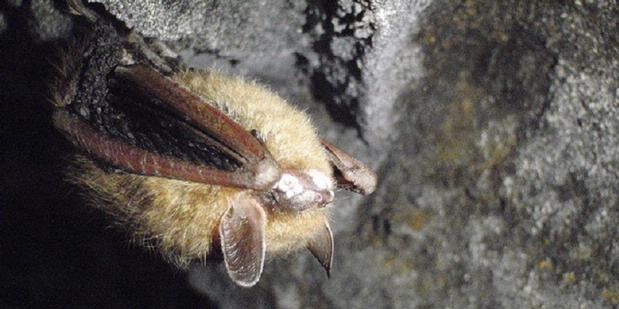
Bats Three Colors Added Wealth Peru


TimWildlife Conservation Society (WCS) have uncovered 365 species Bahuaja Sonene National Park located in southeastern Peru.

Species found include 30 species of birds that have not been previously encountered, including black and white eagle, eagle night phalarope and gray. The study also reveals the types of mammals including bats and bat ears Niceforo big three colors. Surprisingly, there are 233 species of butterflies and moths that successfully revealed. Altogether not been found in the National Park Bahuaja Sonene before.

Julien Kunen, WCS Director of Latin America and the Caribbean, told Our Amazing Planet, Saturday (03/02/2012), said, "The discovery of more species in this area underscores the importance of ongoing conservation measures in this area. Place is right-true crown and an impressive network of protected areas in Latin America. "

Bahuaja Sonene National Park is home to 600 species of birds, over 160 species of mammals, more than 50 species of reptiles and amphibians, 180 species of fish and about 1300 species of butterflies. The species recently documented increase the wealth of the national park area.

Since 1990, WCS has worked in the area of ​​Tambopata and Bahuaja Sonene Parks in Peru, then in Madidi, Pilon Lajas and Apolobamba National Park in Bolivia. Madidi region in Bolivia and Peru covering more than 20,000 sq km of the tropical Andes region with the highest biodiversity on Earth.

Decades ago a bomb discovery of new species. It is said that the new species discovered every three days.

Found shrimp like human hands size


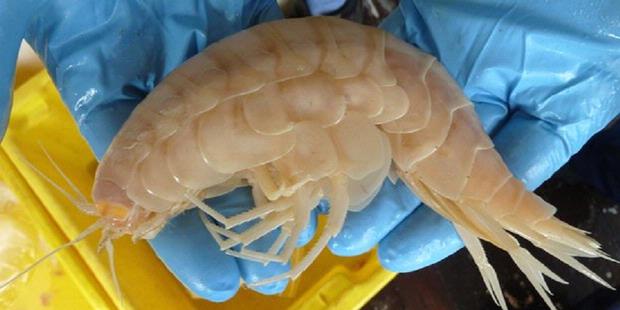
Giant shrimp belonging to the crustacean animals found in the deep sea trench 7 kilometers off the coast of New Zealand.

This includes a very large creature in its class. Animals can be classified into the order Amphipoda, Crustacea group of animals that did not have a carapace and have legs chest (thorax) is almost identical.

Amphipoda has the form udang.Hewan only measuring 2-3 cm. However, supergiant found in Kermadec Trench, measuring 34 cm, 10 times greater.

James Jamieson, a scientist from Oceanlab at the University of Aberdeen, said: "This is much like finding a cockroach the size of a leg."

Strange shrimp is found by the method of large metal trap with the help of a camera-protective glass to address pressures in the deep sea.

A total of 9 specimens documented and 7 sampled. Teams involved are from the University of Aberdeen in Scotland and the National Institute of Water and Atmospheric (NIWA) Research in New Zealand.

The largest specimens measuring 28 cm were taken. While most specimens are successfully captured by a camera measuring 34 cm.

Researchers reveal, Amphipoda are found in the trenches and in width to "tunnel" in the ocean that it 11 km.

Animals are very active. Amphipoda are also known to live in a neighborhood with a much higher pressure than the pressure at sea level.

Supergiant name introduced in 1980 when it discovered the species in Hawaiian waters. However, the specimens were found is now much larger.

Dr Ashley Rowden of NIWA says, "It just shows that the more you look, the more you find as well."

"For animals large and conspicuous and not found in the long term, this is a sign of how little we know about the inner life and unique in New Zealand," said Rowden.

In recent years scientists always surprise with the discovery of new species such as Amphipoda, and may be able to continue to grow with technological advances and research seriringnya